
Equipment Monitoring with ESP32 and Anomaly Detection
- Client
- Manufacturing & Industry 4.0
- Year
- 2024
- Category
- Internet of Things (IoT)
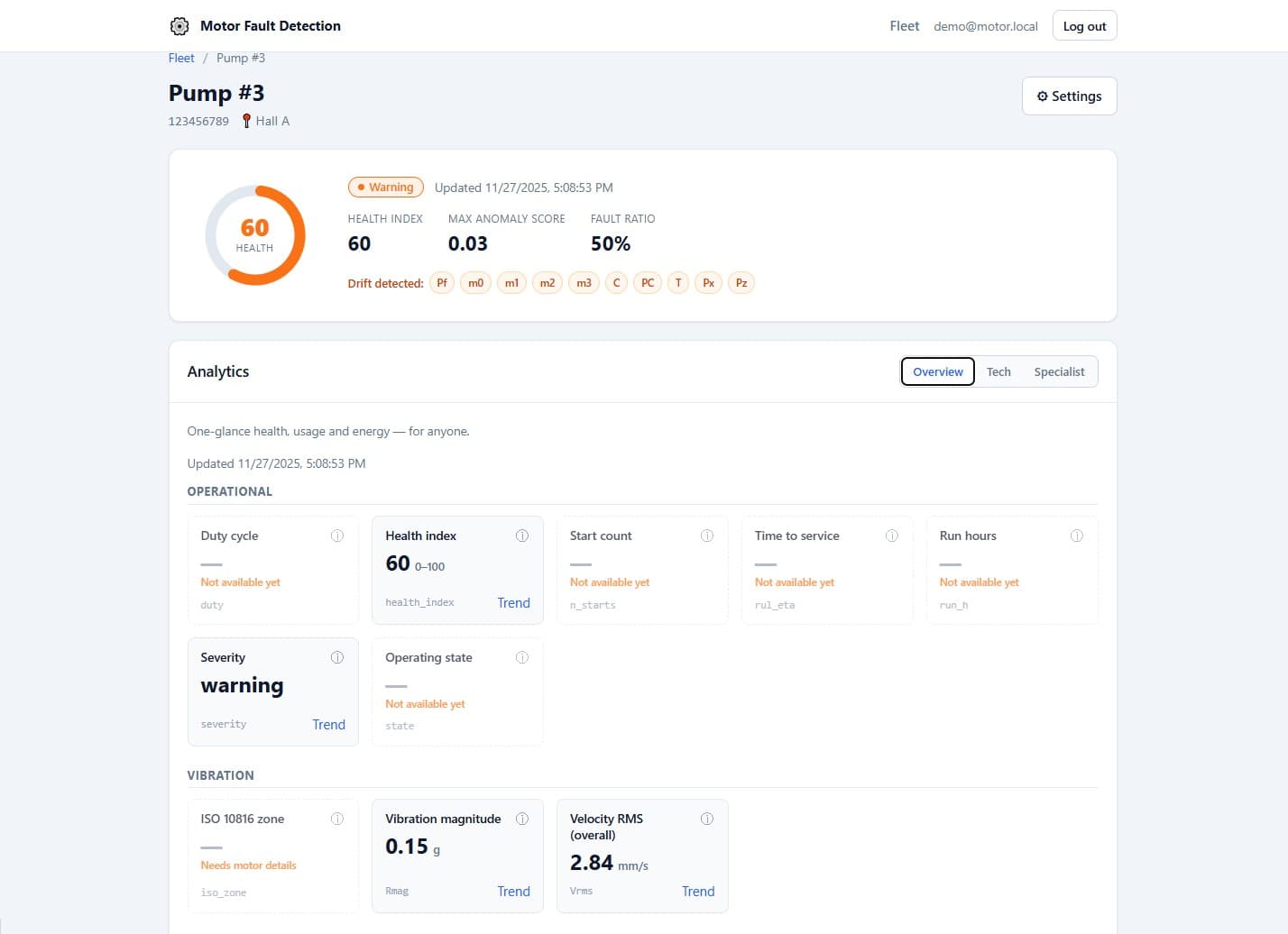
Unplanned machine stoppages can create significant operating costs. The system links an ESP32 node on the machine with a server-side analysis engine to detect unusual patterns and identify the sensor channels contributing most strongly to an alert.
An ESP32 edge node streams temperature, pressure, and vibration data to the server; the backend compares five PyOD algorithms against defined criteria for each machine-data profile.
IQR-based outlier handling and multi-sensor normalization, followed by Z-Score analysis that highlights unusually deviating sensor channels for maintenance review.
Time-series storage with InfluxDB, a FastAPI + PostgreSQL REST backend, and live Streamlit + Grafana dashboards in a microservices architecture scalable across multiple machines.
The Challenge
Distinguishing meaningful changes in temperature, pressure, and vibration data is difficult: fixed thresholds can create false alarms or miss gradual changes, while communication noise and different sensor scales can obscure useful signals. Operators therefore need context showing which measurements contributed to an alert.
Our Approach
An ESP32 node streams temperature, pressure, and vibration data to the server. The backend compares five PyOD algorithms, including Isolation Forest and ECOD, against defined criteria for each machine-data profile. After outlier handling and normalization, Z-Score analysis highlights unusually deviating sensor channels and reports their numerical deviation; this supports investigation but does not by itself identify a mechanical root cause or prove sensor failure. InfluxDB, FastAPI, PostgreSQL, Streamlit, and Grafana handle storage, services, and dashboards.
The Result
The system identifies unusual operating patterns and gives maintenance teams earlier, more focused information for inspection. This can support maintenance planning and help reduce unplanned-downtime risk; the microservices architecture supports multiple machines.
Results
- Makes unusual operating conditions visible earlier and supports maintenance planning
- Highlights the sensor channels contributing most strongly to an alert, with numerical deviation values
- Scales across multiple machines via a microservices architecture
Have a similar project?
Get in touch with NELSco's engineering team to discuss your project requirements.